Furnace ignition repair in Downtown Ashland: what happens during a service call
A step-by-step look at what happens during furnace ignition repair in Downtown Ashland, from the first diagnostic test to igniter replacement and a verified relight.
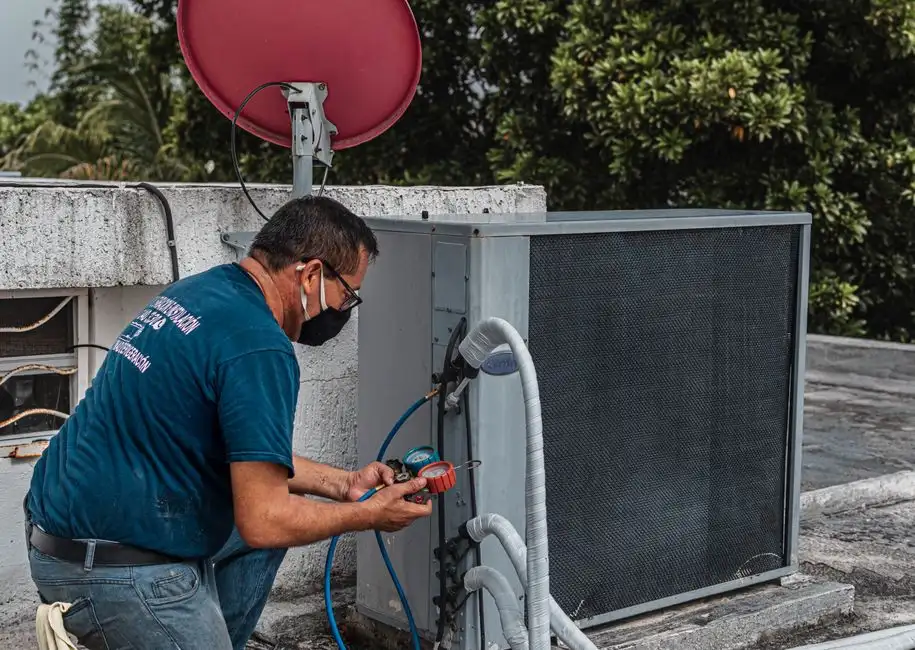
During a furnace ignition repair in Downtown Ashland OH, a technician tests the igniter, flame sensor, gas valve, and control board in sequence, replaces the failed part, and then verifies the burner lights and holds for a full heating cycle. Most calls are diagnosed and repaired in one visit, usually within 60 to 90 minutes once the technician is on site. The rest of this post walks through exactly what we do on that call, what it costs in 2026, and how to tell whether your furnace needs ignition repair or something else.
Furnace ignition repair in Downtown Ashland OH is the diagnostic and repair service that restores a furnace's ability to light its burners, whether the failure is a cracked hot surface igniter, a dirty flame sensor, a stuck gas valve, or a control board that never sends the ignition signal. If your furnace runs the blower but never produces heat, or you hear clicking with no flame, ignition is the first system we check.
We work out of Ashland and cover the whole county, so when you call us for Emergency Furnace Repair Ashland OH, you are talking to technicians who know these streets, these basements, and the older heating systems that fill them.
What happens during a furnace ignition repair in Downtown Ashland OH
During a furnace ignition repair in Downtown Ashland OH, we arrive, confirm the no-heat complaint, pull the fault codes, and test the ignition sequence from the thermostat call to the burner flame. That sequence has five links: thermostat signal, control board, igniter, gas valve, and flame sensor. Any one of them failing stops the light-off.
Most Downtown Ashland homes we service were built between 1900 and 1960, and the heating systems inside them range from 1990s mid-efficiency furnaces to units installed in the last few years. That matters because ignition components fail differently by age. A 1998 furnace usually has a hot surface igniter that has gone brittle; a 2022 unit more often has a dirty flame sensor or a pressure switch that will not close.
We start every ignition call the same way: shut off the gas, pull the blower door, and read the LED fault code on the control board. That single code eliminates half the guesswork before we touch a meter.
Why won't my furnace ignite in Ashland Ohio?
Your furnace won't ignite in Ashland Ohio for one of six reasons: a failed hot surface igniter, a dirty or failed flame sensor, a gas valve that will not open, a control board that is not sending voltage, a pressure switch that never closes, or a cracked igniter caused by handling during a previous repair. In our experience, the igniter and the flame sensor account for roughly 70 percent of no-ignition calls.
Here is how the failure modes break down:
- Hot surface igniter: a hairline crack or a reading above 100 ohms means it will glow weakly or not at all. This is the single most common ignition failure we replace.
- Flame sensor: a silica film builds up after two to three seasons. The burner lights, then shuts off after 3 to 5 seconds because the board never sees flame.
- Gas valve: you hear the igniter glow and the click, but no gas flows. We confirm with a manometer reading at the valve outlet.
- Control board: no 120-volt signal to the igniter, or no 24-volt signal to the gas valve. Boards fail from heat and from power surges.
- Pressure switch: the inducer runs but the switch never closes, so the board locks out before ignition. A clogged port or a cracked hose is often the cause.
If your furnace is running but pushing room-temperature air, that is a different failure and we handle it under furnace blowing cold air repair Ashland OH. If the burner lights and then drops out repeatedly, that is usually the flame sensor, and it is covered under furnace flame sensor repair Ashland OH.
The ignition service call, step by step
The ignition service call follows a fixed order so we never replace a part that is still good. Skipping steps is how homeowners end up paying for two igniters in one season.
Step 1: Confirm the call for heat
We set the thermostat 5 degrees above room temperature and watch for the inducer motor to start. If nothing happens, the problem is upstream of ignition and we test the thermostat and low-voltage wiring first.
Step 2: Read the fault code
Every furnace made in the last 25 years stores a blink code or an error code. A code 33 on a Carrier, for example, points at the igniter or flame sense circuit. That code tells us which meter test to run first.
Step 3: Test the igniter
We pull the igniter and check resistance with a multimeter. A healthy hot surface igniter reads between 40 and 90 ohms at room temperature. Anything above 100 ohms, or any visible crack, means replacement. We also check for 120 volts at the igniter leads while the board is calling for ignition.
Step 4: Inspect the flame sensor
The flame sensor is a single rod sitting in the burner flame. We clean it with steel wool, check the microamp reading, and replace it if it reads below 1.5 microamps. A dirty sensor is the second most common cause of a furnace that lights and then quits.
Step 5: Verify gas flow and the valve
We confirm inlet gas pressure at 7 inches of water column for natural gas, then check that the valve opens when the board signals it. A valve that clicks but does not open gets replaced.
Step 6: Test the control board and pressure switch
If the igniter and sensor test good, we move to the board. We check for the 24-volt signal to the gas valve and the 120-volt signal to the igniter. If the inducer runs but the pressure switch never closes, we clear the port and test the switch with a manometer.
Step 7: Reassemble and run a full cycle
We replace the failed part, put the furnace back together, and run it through three complete heating cycles. We watch the flame for a steady blue color, check the temperature rise against the data plate, and confirm the furnace shuts off cleanly at the thermostat setpoint. If the furnace is older or the heat exchanger is suspect, we also run a combustion check under furnace efficiency testing Ashland OH before we leave.
How long does furnace ignition repair take in Downtown Ashland?
Furnace ignition repair in Downtown Ashland takes 60 to 90 minutes on site for a standard igniter or flame sensor replacement, and 2 to 3 hours if the control board or gas valve has to come out. Diagnostic time alone runs 20 to 30 minutes on most calls.
Two things stretch that window. First, older furnaces in the downtown blocks sometimes have igniters that are no longer stocked locally, so we may need to source the part the same day. Second, if the furnace is in a tight closet or a finished basement ceiling, access adds 15 to 20 minutes. We tell you which situation you are in before we start.
If you call before 4 p.m., most ignition repairs are finished the same day. After-hours calls are handled through our 24/7 furnace repair Ashland OH line, and we still aim to have heat restored on the first visit.
Furnace ignition repair cost in Ashland
Typical 2026 pricing in this area runs $150 to $320 for a hot surface igniter replacement, $120 to $220 for a flame sensor clean or replace, and $450 to $850 when a control board or gas valve is the failed part. Those ranges include the diagnostic and the part.
What moves you within the range:
- Part availability: a common igniter is on the truck; an obsolete board may need to be ordered.
- Access: a furnace in an open basement is faster than one behind a finished wall.
- After-hours timing: evening and weekend calls carry a higher rate than weekday appointments.
- Related failures: if the pressure switch or inducer is also failing, we quote that before we start, not after.
We give you the price before we begin work. No surprise line items, no parts swapped on a guess.
Common mistakes we see on ignition calls
The most expensive mistake we see is a homeowner or a handyman replacing the igniter when the real problem is the flame sensor or the control board. The second is handling a new igniter with bare fingers, which leaves oil on the ceramic and shortens its life by a season or more.
Other repeat offenders:
- Resetting the breaker repeatedly. A furnace that locks out three times is telling you something. Repeated resets can mask a gas valve problem and put unburned gas in the heat exchanger.
- Cleaning the flame sensor with sandpaper. Sandpaper scratches the rod and changes its microamp output. Steel wool or a soft abrasive pad is the right tool.
- Ignoring the fault code. The board already told you what failed. Guessing wastes a service call.
- Replacing the igniter without checking voltage. If the board is not sending 120 volts, a new igniter will fail the same way the old one did.
- Skipping the filter. A clogged filter overheats the heat exchanger and trips the limit switch, which looks like an ignition problem but is not. We cover that under furnace limit switch repair Ashland OH.
When to call a professional
Call a professional the moment you smell gas, hear repeated clicking with no flame, or see the furnace lock out more than twice in one day. Those are not DIY symptoms. Gas work and ignition voltage testing require a licensed technician and a multimeter, and a misdiagnosed ignition fault can leave unburned gas in the system.
If you are in Downtown Ashland, the south side near Brookside Park, or out toward the fairgrounds, we cover your address. Our team handles everything from a single igniter swap to a full emergency furnace repair Ashland OH when the furnace quits on the coldest night of the year. One call, one visit, heat back on.
Frequently Asked Questions
What happens during a furnace ignition repair in Ashland OH?
We confirm the call for heat, read the fault code, test the igniter resistance, inspect the flame sensor, verify gas pressure, and check the control board signals. We replace the failed part, then run three full heating cycles to confirm the burner lights and holds. Most repairs finish in 60 to 90 minutes.
How long does furnace ignition repair take in Downtown Ashland?
Plan on 60 to 90 minutes on site for an igniter or flame sensor, and 2 to 3 hours if the control board or gas valve is the failed part. Diagnostic time is 20 to 30 minutes. Same-day completion is typical for calls placed before 4 p.m.
Why won't my furnace ignite in Ashland Ohio?
The usual causes are a cracked hot surface igniter, a dirty flame sensor, a gas valve that will not open, a control board not sending voltage, or a pressure switch that never closes. Igniter and flame sensor failures account for about 70 percent of the no-ignition calls we run.
Can I replace a furnace igniter myself?
You can physically swap the part, but you cannot safely confirm the board is sending 120 volts to it or that the gas valve opens on signal. A new igniter installed on a bad board fails the same way. We test the whole ignition circuit, not just the part.
How much does furnace ignition repair cost in Ashland?
In 2026, expect $150 to $320 for an igniter replacement, $120 to $220 for a flame sensor service, and $450 to $850 when a control board or gas valve is involved. Prices include the diagnostic and the part, and we quote before we start.
Get help with Emergency Furnace Repair in Ashland
If your furnace will not light and the house is losing heat, we can be on the way with the parts to fix it. Call Ashland Furnace Repair Pros at +14195820227 and we will walk you through what is happening before we arrive.